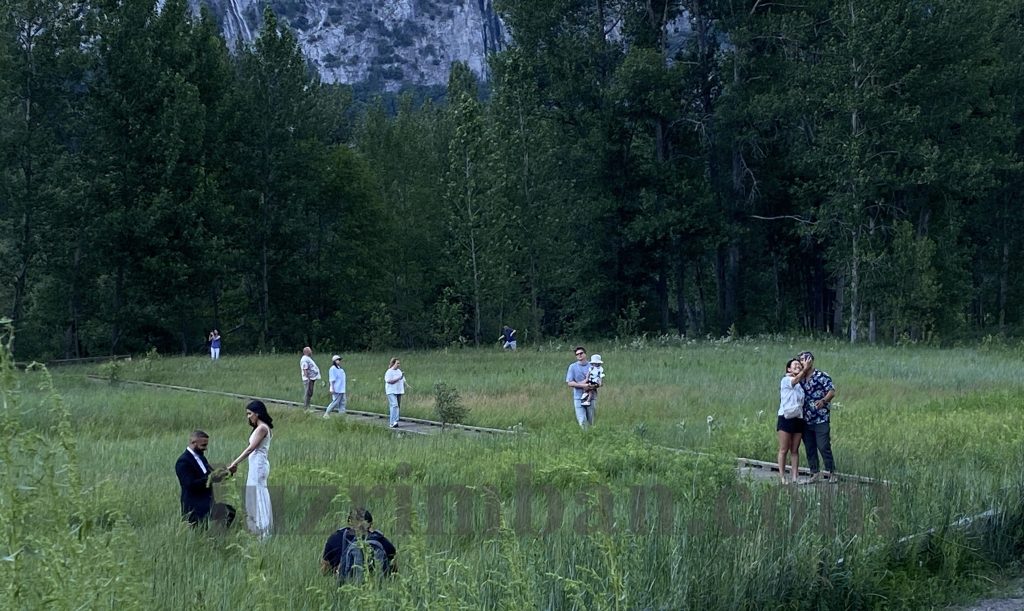
Around this time last year, my family made a three-day/two-night trip to Yosemite National Park in California, and among the hundreds of images I took home were variations on this one. Only when I was reviewing my photo gallery much later did I realize that I had seemed to capture at least three pairs of people representing different kinds of love—paternal love, romantic love and marital/conjugal love. Trite, I know, but that was the thought that crossed my mind when I had the chance to examine the images more closely.
At that moment, I was just trying to take a photograph of the scenery in that part of Yosemite known as the Valley, where the terrain was flat and friendly to the general tourist. Like many others that day, we parked by the roadside to capture from the ground the famed rock formations that towered over us: Cathedral Rock, Half Dome, Glacier Point.
Although we had disembarked, we stayed near our vehicle and from there took our selfies. But little did I know that my pictures told the human stories beyond the scenery. A man and a woman in the field, with a photographer filming the man in the act of proposing for what could only be a prenup video (my assumption). Another couple taking a twofie, possibly husband-and-wife or girlfriend-boyfriend (another assumption). And then there were the father-and-child at a spot between the two couples. Further behind them were people who ventured toward the wooded area, one of them holding a camera.
All of my impressions are nothing but assumptions about relationships and love, and experience tells me it’s really foolish to make such assumptions. I could be wrong. But what is certain is that all of us who there taking pictures had Yosemite as the backdrop of life events—a pre-wedding shoot, a vacation, a pleasure trip. Even I as observer/photographer was taking part in a ritual all too common in our time, capturing social-media-worthy images made bigger by the location.
Yosemite is no ordinary destination. It is, in the words of the National Parks Service, “Not just a great valley, but a shrine to human foresight, the strength of granite, the power of glaciers, the persistence of life, and the tranquility of the High Sierra.” Being inside the Park is like being in the bowels of a giant temple, and one could only feel awed and silenced by the beauty that is everywhere.

Located in California’s Sierra Nevada mountains on the central and eastern sides of the state, the area known as the Yosemite National Park is millions of years old, and has been for thousands under the stewardship of Native American tribes. The Sierra Nevadas themselves were named by the Spanish conquistadores after the skyline and the climate. “Sierra” means saw for the jagged peaks and “nevada” for the snow that falls on the mountains.
Yosemite National Park is huge, spanning four counties. In the book Yosemite: An American Treasure, the writer Kenneth Brower says, “Yosemite National Park includes nearly 1,200 square miles of western Sierra Nevada wonder—an area about the size of Rhode Island. More than 450 miles of roads leads 3.5 million visitors each year through Yosemite’s scenic splendor. Hiking trails totaling 800 miles lace the backcountry, which makes up 94 percent of the park.”
Brower’s book was published 35 years ago in 1990 as part of the National Geographic Society’s 25thanniversary, and the number of visitors has gone up slightly, with the pandemic causing a drop. The National Parks Services says close to 4 million people visit Yosemite every year, with most of them arriving from May to October.
The Valley, which attracts the most number of tourists, contains a food court and shops, as well as accommodations, but this “mile-wide, 7-mile-long canyon” commercial center of Yosemite covers only about one percent of the park, according to the National Geographic’s Guide to the National Parks of the United States. (Fifth Edition). Yosemite has 800 miles of trails for hikers and rock formations for rock climbers. It has campgrounds, an Indian Museum Center and various other attractions.
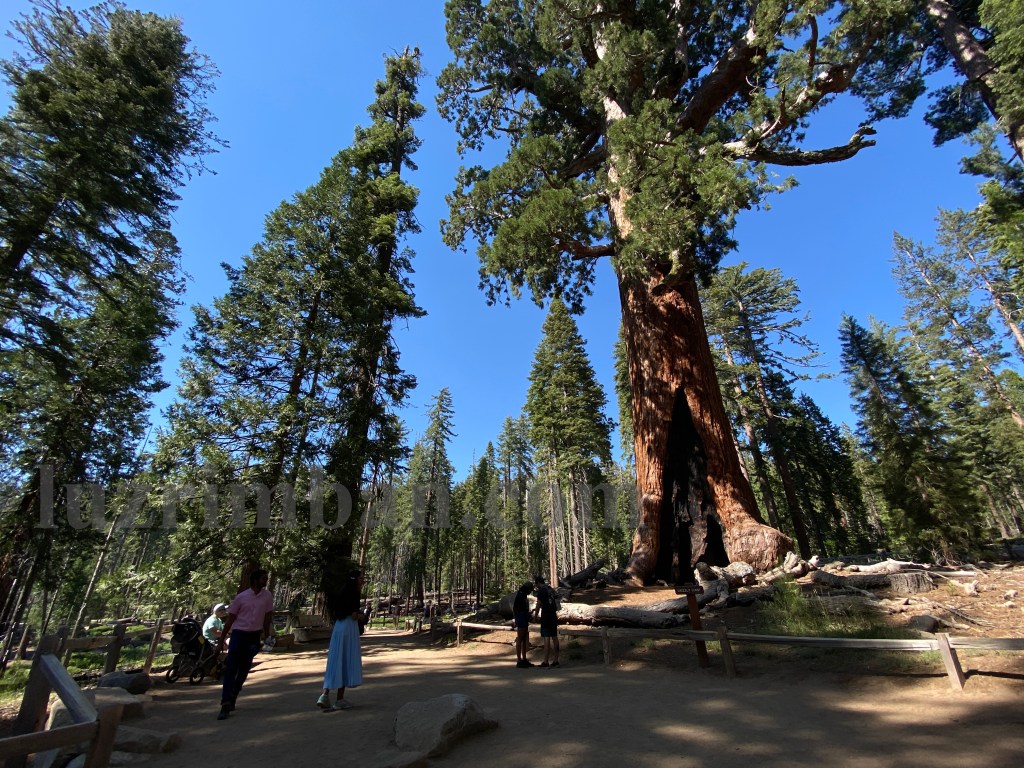
The National Geographic Guide’s advice is for visitors to spend at least a half to a full day at the Park, but the people who manage Yosemite suggest longer stays. “The optimal time to explore the park would be several days to a week, when you can work into the schedule several days of long hikes, as well as plenty of time for lounging by the languid Merced River or cozying up to the crackling fireplace with a good book. However, two days will be enough time for one great hike (the best way to see Yosemite) and a few other glimpses into what this 1,200 square-mile UNESCO World Heritage site and natural wonder reveals to visitors.” This is Yosemite National Park website’s suggestion for a two-day tour.
A visit to Yosemite, as with all of America’s National Parks, requires a significant investment in resources, time and energy, which is why it is best to go prepared. Planning is crucial, especially for those staying the night. There are any number of hotels or Airbnbs near Yosemite’s entrances but it is best to check how far they are to which entrance, with your choice of entrance depending on where you want to go. The most popular entrance is the South Entrance which is closest to the ancient Sequioa grove.
In our case, our family spent about a total of a day-and-a-half inside Yosemite, mostly walking through the Sequioas and driving around the park. There is talk of returning one day, for a more carefully planned visit, but there are so many parks to visit, and so little time.
###
* The title of this post comes from an anecdote in Kenneth Brower’s book Yosemite: An American Treasure. As a young boy, he said, he heard it as “Yoursemite.” He said, “When asked if I wanted to go to Yosemite, I would answer ‘Yes! Let’s go to Mysemite.’ I thought the place was mine.” Brower’s family spent a lot of time in Yosemite. His maternal great-grandfather was John P. Irish, a Commissioner of Yosemite who favored state over national control over the park, which put him in opposition to John Muir, who advocated national control over the preservation of America’s national parks. #
 On the road
Leave a comment