For the past two weeks, I’ve been taking my daily walks around the neighborhood in the company of Ben Tucker, more precisely, his mesmerizing voice reading the 1962 novel Big Sur by Jack Kerouac.*
Big Sur is a first-person stream-of-consciousness account of a summer the alcoholic writer Jack Duluoz spends in the San Franciso-Monterey-Big Sur area in California, as he sinks into more drinking, depression and insanity. Big Sur supposedly being a sort of autobiography gives me the feeling Kerouac himself is telling me his story.
Big Sur has been called a masterpiece of the beat generation and revolves around Duluoz’s circle of friends, based on real people in Kerouac’s life, mainly his beat generation comrades. In fact, the Wikipedia entry for Big Sur lists the fictional identities alongside their real names. And then there are actual places like San Francisco’s iconic City Lights Bookstore whose founder, Lawrence Ferlinghetti, is portrayed in the novel as Lorenzo Monsanto, owner of the cabin in the Big Sur district Duluoz stays in, so he could write.
Big Sur the novel has little to do with Big Sur the coastal community, which was just the backdrop for some of Duluoz’s ruminations about friends, fame, and fans, everything he seems to be running away from but couldn’t escape. Big Sur represents that escape but his friends keep pulling him back to the city.
I chose to listen to the audiobook after a visit to Big Sur a few months ago, hoping it would give me some insight into California’s Central Coast. Big Sur the novel is a totally different experience, but I can attest to the beauty of Big Sur the place and some of its hidden gems.
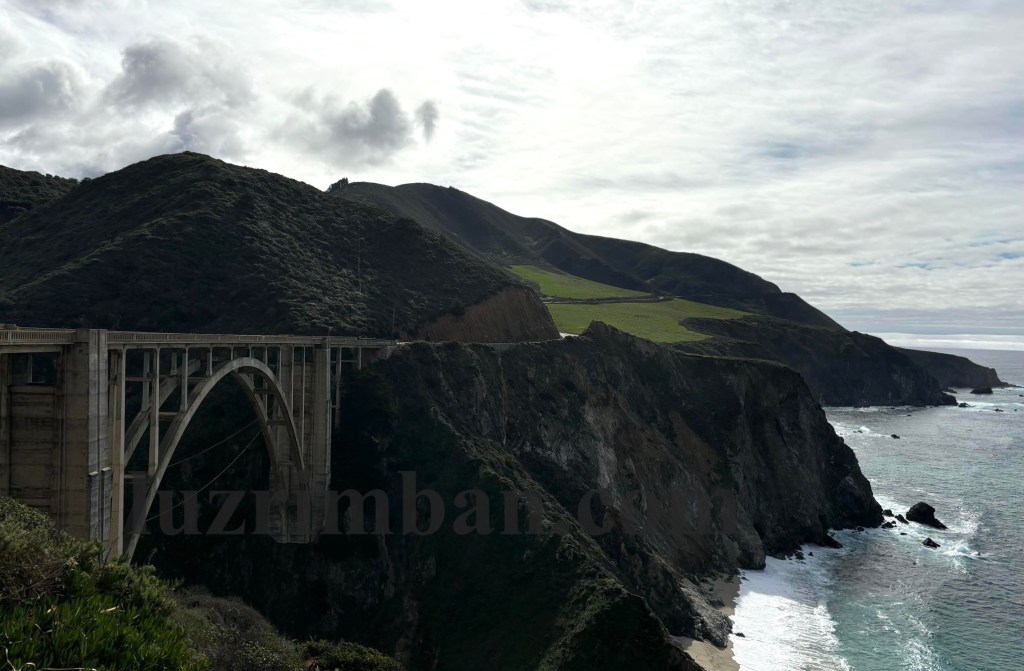
The main attraction, of course, is the spectacular coastline and one of the highlights is the Bixby Canyon, which in the novel is called Raton Canyon. The bridge Duluoz talks about in the novel is presumed to be Bixby Bridge, pictured above. Imagine spending three weeks alone in a cabin at the bottom of that canyon not far from the sea, isolated from other human beings, which is how Big Sur the novel begins. `
Jay Haeske, in his blog Retracing Jack Kerouac, photographed the “path leading from Lawrence Ferlinghetti’s cabin in Bixby Canyon to the Pacific Ocean.” The photograph showed a tiny path amid the thicket. There was only one path leading to the sea, Haeske said, though he didn’t know where the cabin was located. A reader of Haeske’s blog, however, commented that he did manage to find the cabin, based on Duluoz’s/Kerouac’s instructions in the book.
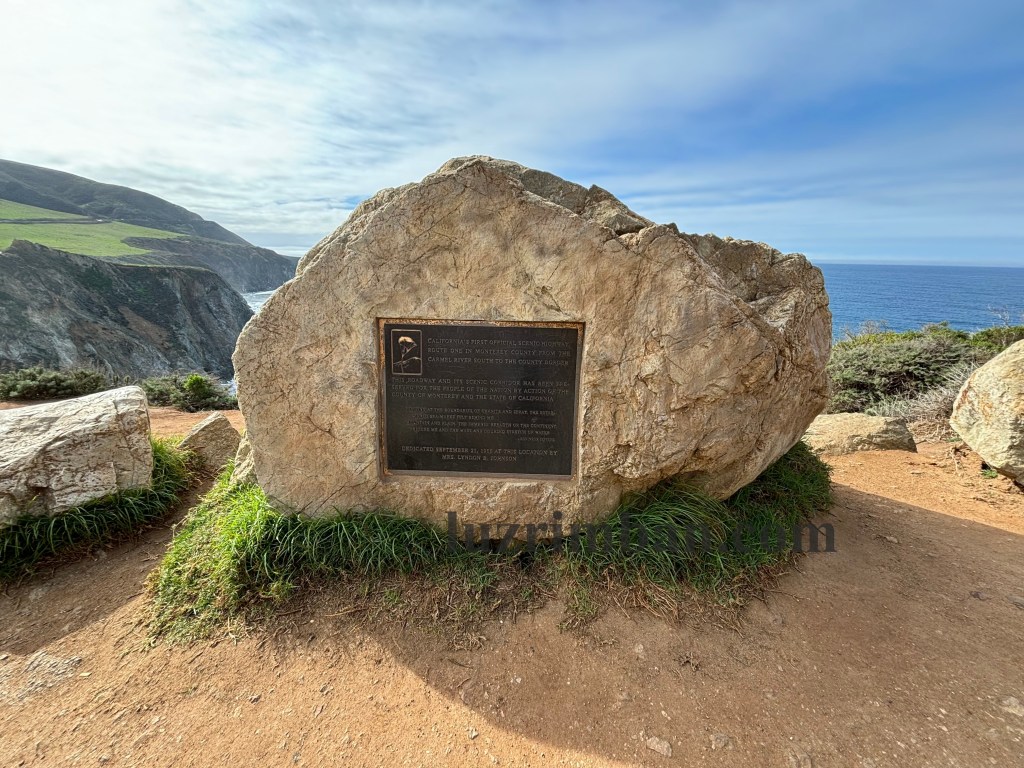
Just before crossing the bridge from the Carmel side is a marker, dedicated Sept. 21, 1966 by then First Lady Mrs Lyndon B Johnson. It reads: “California’s first official scenic highway, Route 1 in Monterey County from the Carmel River South to the County border.”
“This roadway and its scenic corridor has been preserved for the people of this nation by action of the County of Monterey and the State of California.”
The marker then carries a quote from the Robinson Jeffers poem, Continent’s End:
I gazing at the boundaries of granite and spray, the established
sea-marks, felt behind me
Mountain and plain, the immense breadth of the continent, before
me the mass and doubled stretch of water.
Indeed, Big Sur is at the edge of the continent, on the rim of the Pacific Ocean, a lovely destination one could hie off to to get away from it all, as Duluoz/Kerouac once did. A fringe place one flees to, when one can’t stand the center or the mainstream.
I guess that is what the Big Sur-Jack Kerouac connection means to this day. They both represent counterculture, a bohemian lifestyle, freedom, escaping a world that seems to be getting uglier by the day. It is where artists, writers, poets, musicians and other creators find a home no matter how briefly, with the scenery providing respite for the soul. It is a place where one frees the mind and enables it to create.
In the 1950s/1960s, the pioneers of this counterculture were called the beat generation, and Kerouac was one of the leaders. They came before the Hippies and Flower Children, although reading and listening to Big Sur, I would think the Beatniks were cut from a different cloth. They were rebel intellectuals spewing Nietzsche, James Joyce, Buddha, but had sexist notions about the world they lived in, for example having no place for women in their world, as the writer Lynnette Lounsbury wrote.
In Big Sur, we stopped by the Nepenthe restaurant for a snack. The staff were friendly and the food satisfying. We should have had a dazzling view of the sea out in the balcony had not the fog rolled in while we were there. Nepenthe prides itself on being a “mecca of poets, artists, travelers and vagabonds [that] has served guests for many decades, opening for business on April 24, 1949.”
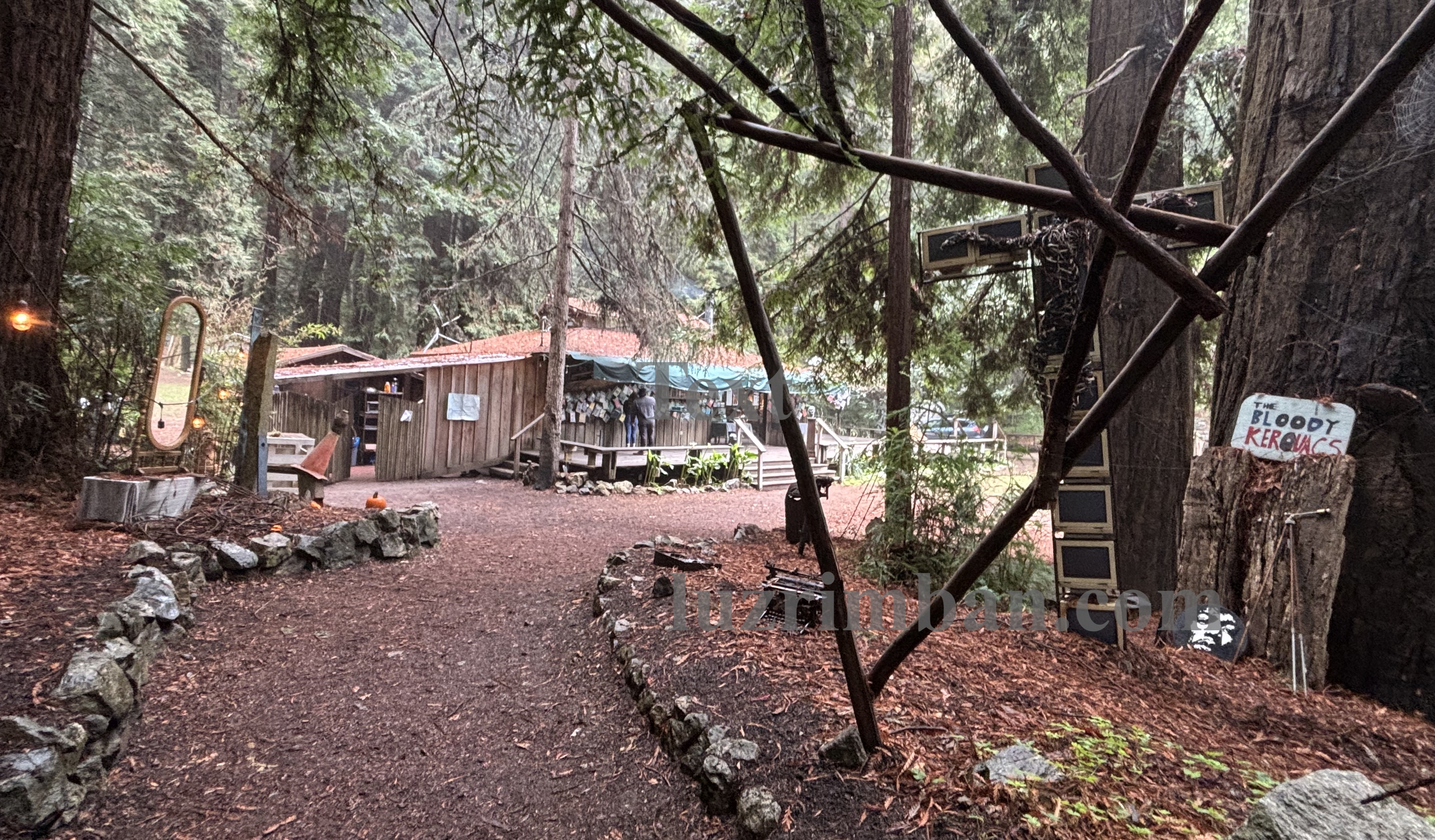
A bit farther down the road from Nepenthe is the Henry Miller Library in honor of the novelist and short story writer.** The place has a bookstore in a cabin in the middle of grounds surrounded by trees, with a low wooden stage somewhere there designed for small concerts and similar activities catering to writers, artists and musicians. The lady who tends the bookstore said her father was friends with Jack Kerouac who stayed nearby while writing his novel. The path leading from the road to the bookstore is strewn with old desktop computers in the shape of a cross, old typewriters, photographs hanging on a wooden gate. The place gives the visitor/ booklover the feeling of being cocooned within a forest hideaway, far from the noise of the real world.



Though Big Sur may seem remote and isolated, with long stretches of winding road, it is dotted with many restaurants, pubs, cafés and inns. The Big Sur Community has a guide to these establishments, lodgings and activities. As of this writing, there are advisories that a mudslide has cut off a 6.8 mile stretch of California Route 1 between Lucia and Esalen Institute and travelers coming from the South should check travel routes for detours.
—
*The Big Sur audiobook narrated by Ben Tucker is free to download from Librivox.org. which asks listeners for a small donation. I enjoyed how Tucker owned Kerouac’s words and made me feel like I was listening to Kerouac himself, hearing him pour out his anguish at a world that was tearing him apart.
**The writer Henry Miller lived in Kerouac’s time and is mentioned in Big Sur, but as the novel progressed and Duluoz was getting paranoid and thinking ill of his friends, so did he of Miller. When Duluoz said Miller wrote the preface to one of his books and but that he probably did so because he was riding on the trend and popularity of Duluoz and his novels, I thought it was Duluoz being grumpy.
(This blog is titled “On the road,” but has nothing to do with Kerouac’s most famous novel. It happened to be the expression that best reflected my blog’s content.) ###
 On the road
Leave a comment