
Social media can be a hellhole some days, especially when a raging controversy brings out the critic in each one of us. People feel like they have something to say, even if that something is nothing really and ends up only muddling the issue. We rage and rage, and in the process encourage others to do so, till the platform becomes nothing more than a boombox spewing banging sounds that don’t really make sense.
This was what came to mind when I heard how Cardinal Blase Cupich, Archbishop of Chicago, deals with the demands of his job. Cupich was close to Pope Francis and is also esteemed by Pope Leo, who appointed him to be a member of the Pontifical Commission for the Vatican State.
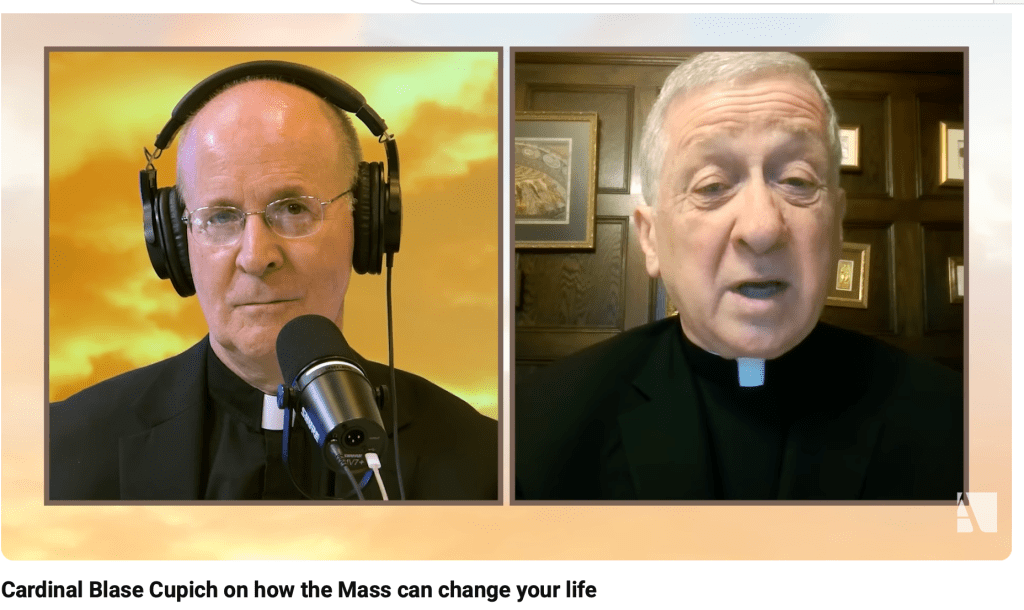
Screenshot of the YouTube video of “The Spiritual Life with Fr. James Martin” streamed on April 21, 2026.
Cardinal Blase Cupich, right, and Fr. James Martin, S.J., left, discussed the meaning of the sacraments in the lives of Catholics, among others, and touched on how Cardinal Cupich handles the demands of a high profile job that entails speaking out on pressing issues of the day.
Cupich is vocal about his support for migrants but some of his views and actions on this issue did not sit well with his community. How does he know when to speak up and what about? He was asked this question by the Jesuit priest Fr. James Martin on the podcast “The Spiritual Life with Fr. James Martin.”
Cupich said he asks himself three questions when speaking out:
- Is it true?
- Does it have to be said?
- Do I have to say it?
Cupich says he speaks up not to draw attention to himself, or to rile up political groups. But he steps up when “some things have to be said and (if) it’s not being said and I have the words to do it.”
That someone of Cupich’s stature employs these criteria is a reminder to the rest of us with little or no justification to opine on anything, as it were, in public spaces like social media. Social media has had a democratizing effect, it is true, but not everyone needs to grab the microphone just because it’s there.
Each one of us has to have our own filters, and If not filters, then friends or family, people with whom we can discuss issues that annoy, enrage or irritate us. Often what we miss are the real life conversations with real people who know where we’re coming from and why we say things.
###


Leave a comment