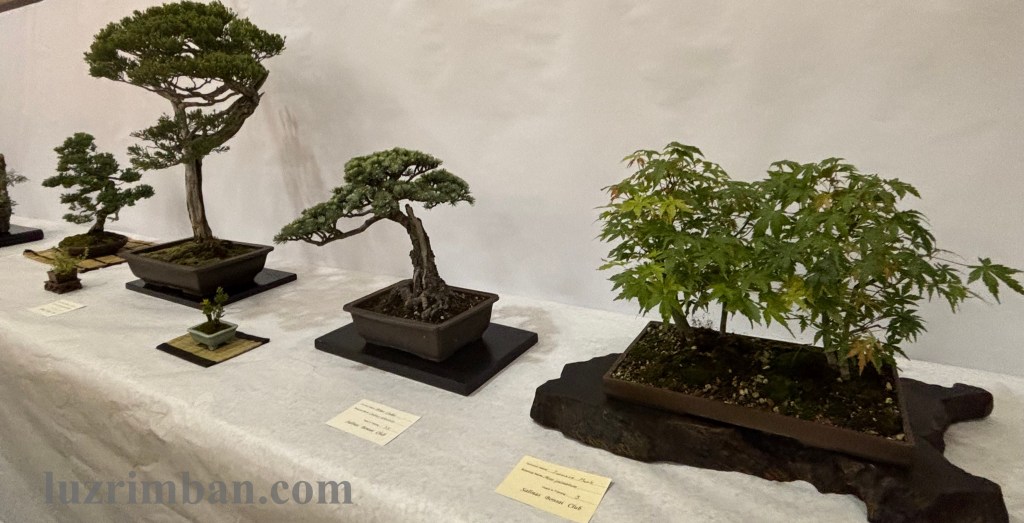
If time is precious, then a bonsai is gold.
Each one holds the years of care, skill, and concentration its owner poured into it to create a miniature landscape from the saplings of a normal tree. That would make a bonsai the ultimate luxury.
That is what it seemed to me as I viewed the bonsai collection on display in Salinas last April. Members of the Asian Community—Japanese, Chinese, Filipino—held their annual Asian Cultural Fair and opened their doors to visitors.
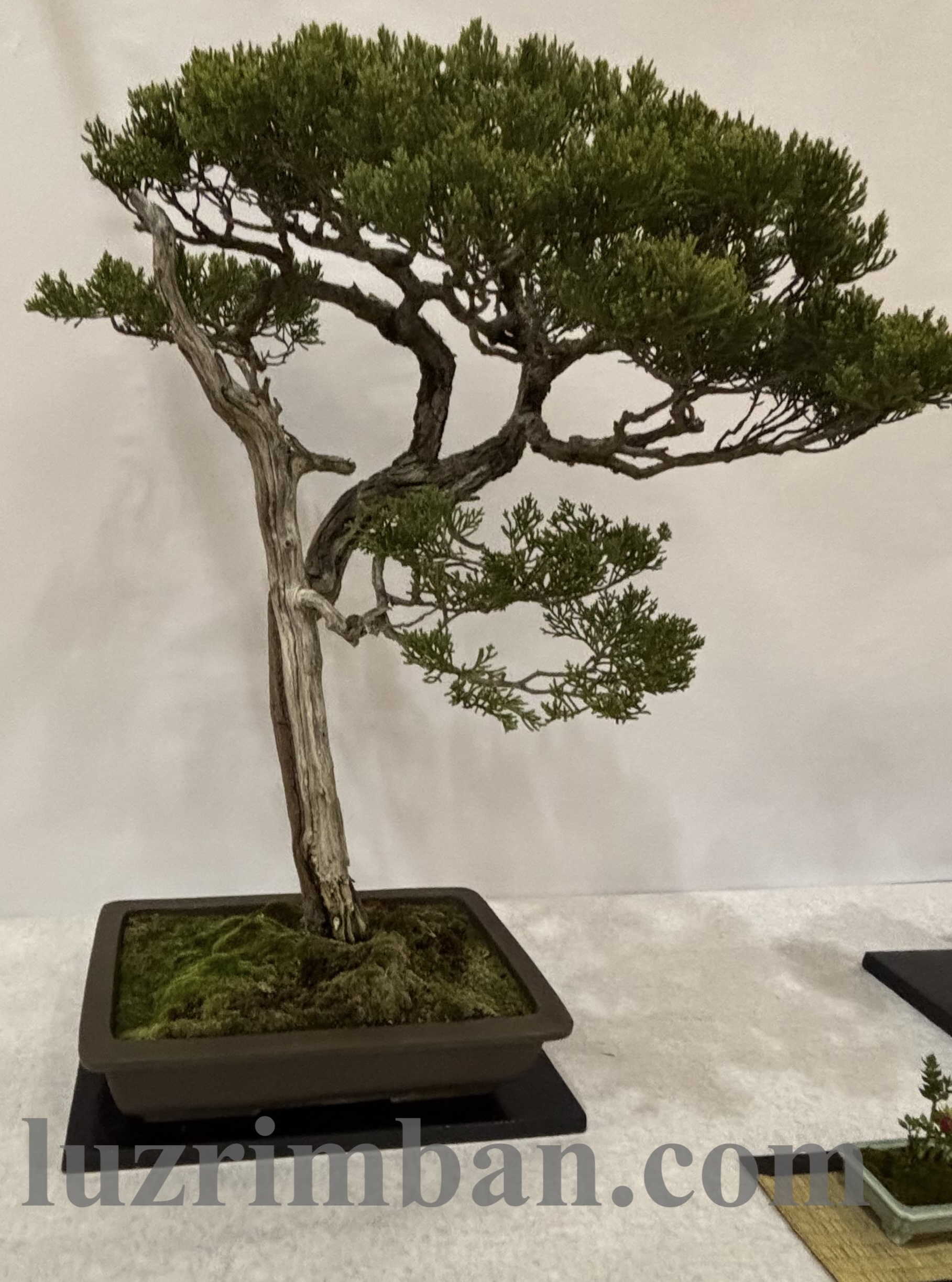
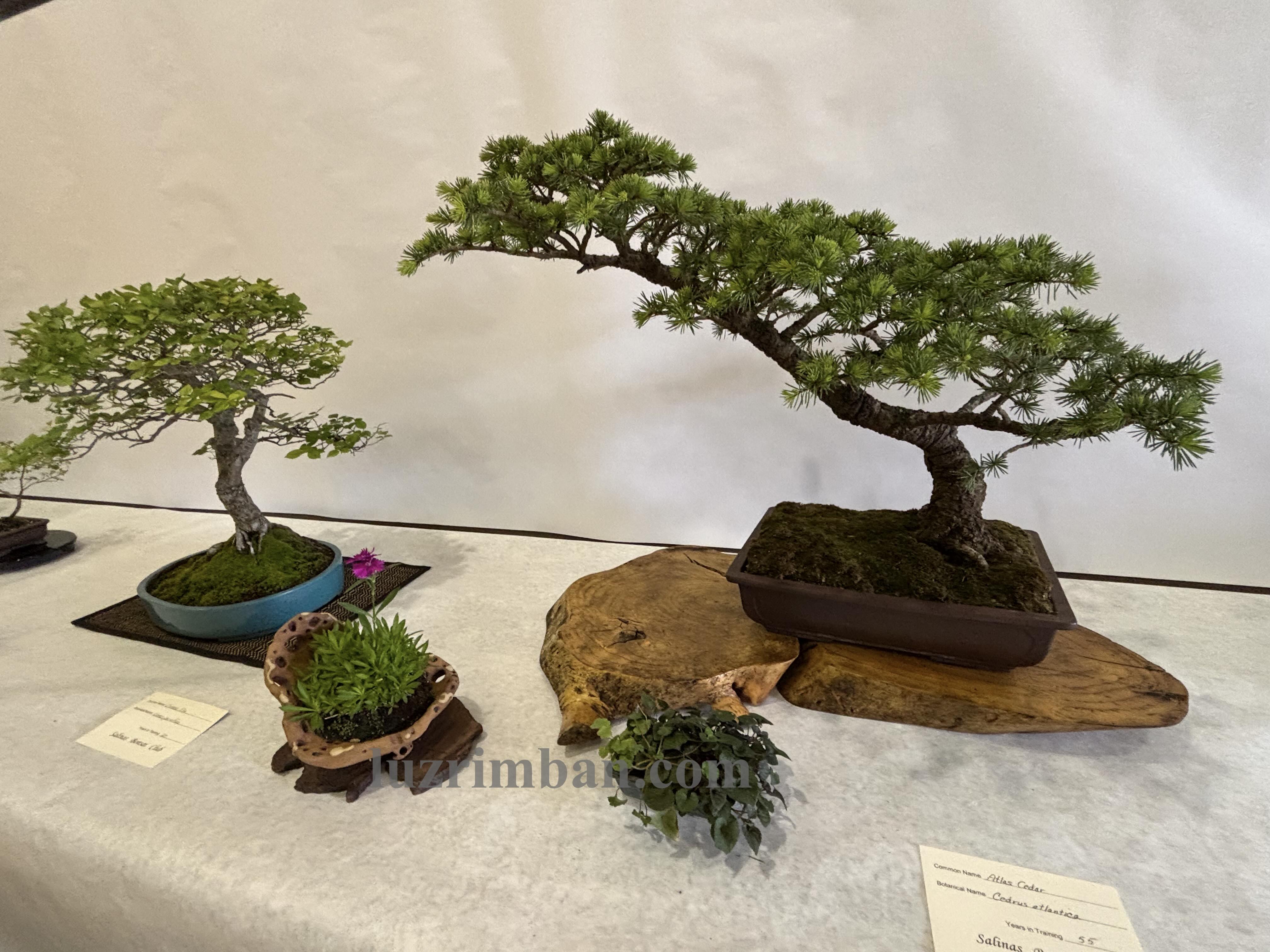
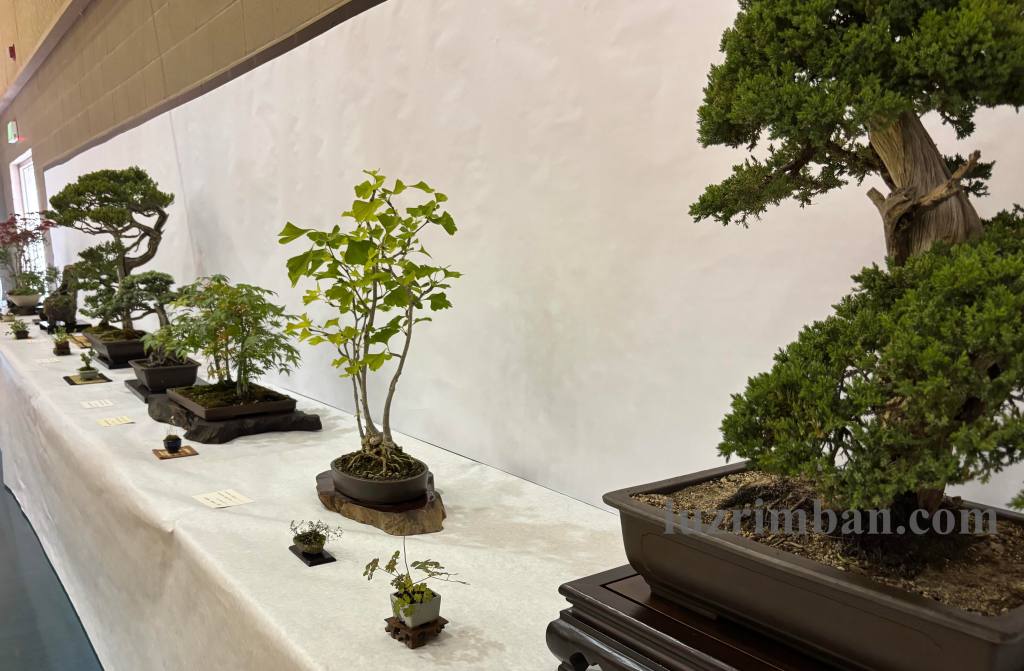
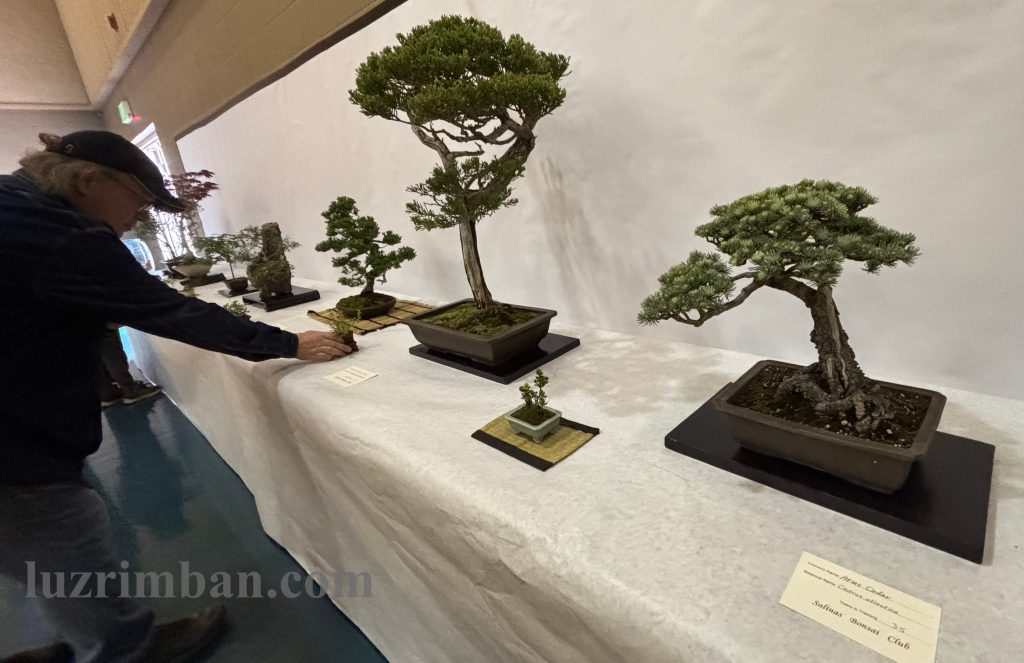
The three groups each had their own gathering places where they featured musical numbers and other cultural attractions. My family and I spent the lunch hour at the gym next to the Buddhist Temple of Salinas where the Japanese community offered hot, delicious ramen and spam musubi. On the sidelines of all the dancing and eating were the bonsai trees: tiny versions of junipers, maples, cypress.
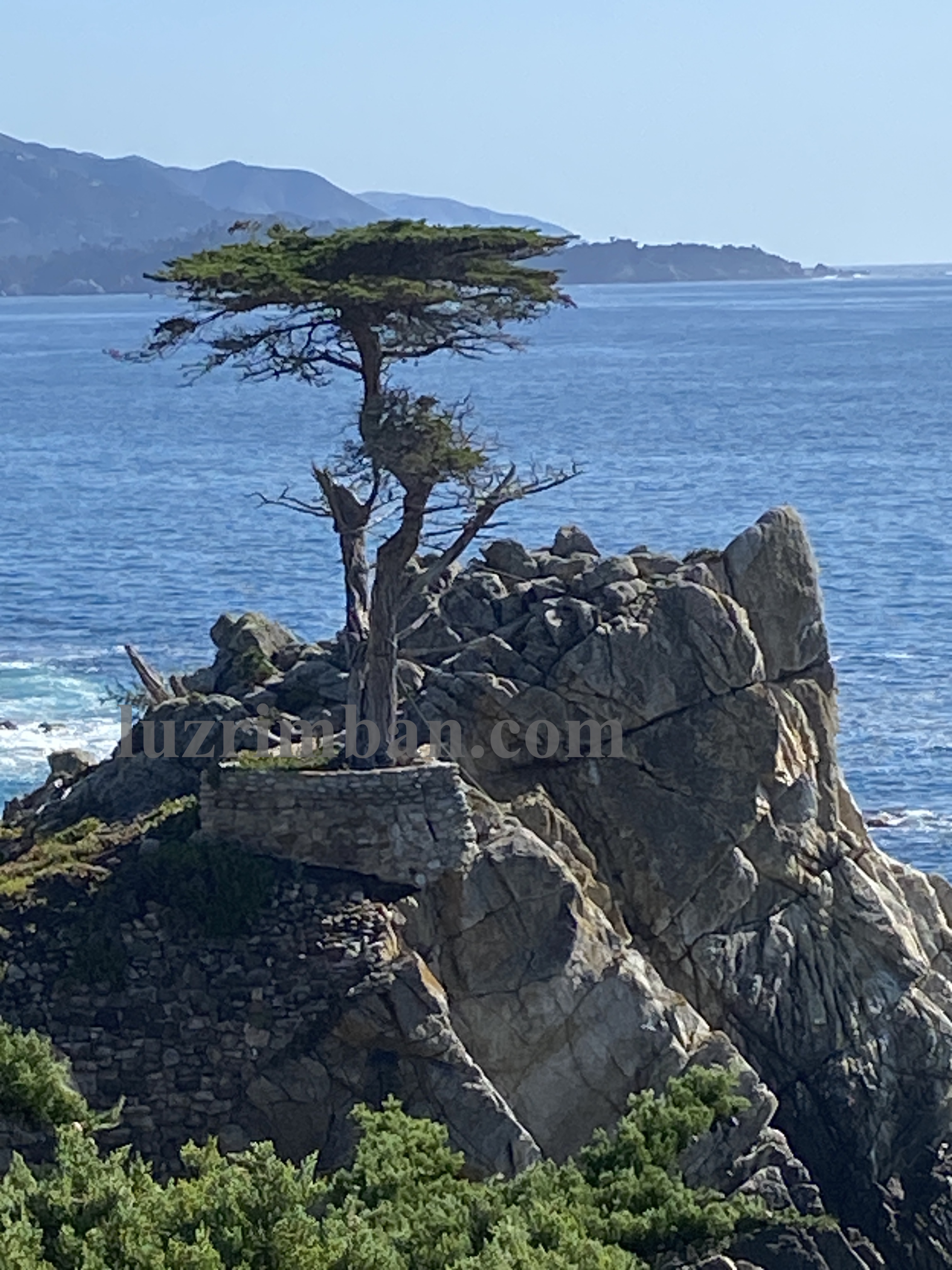
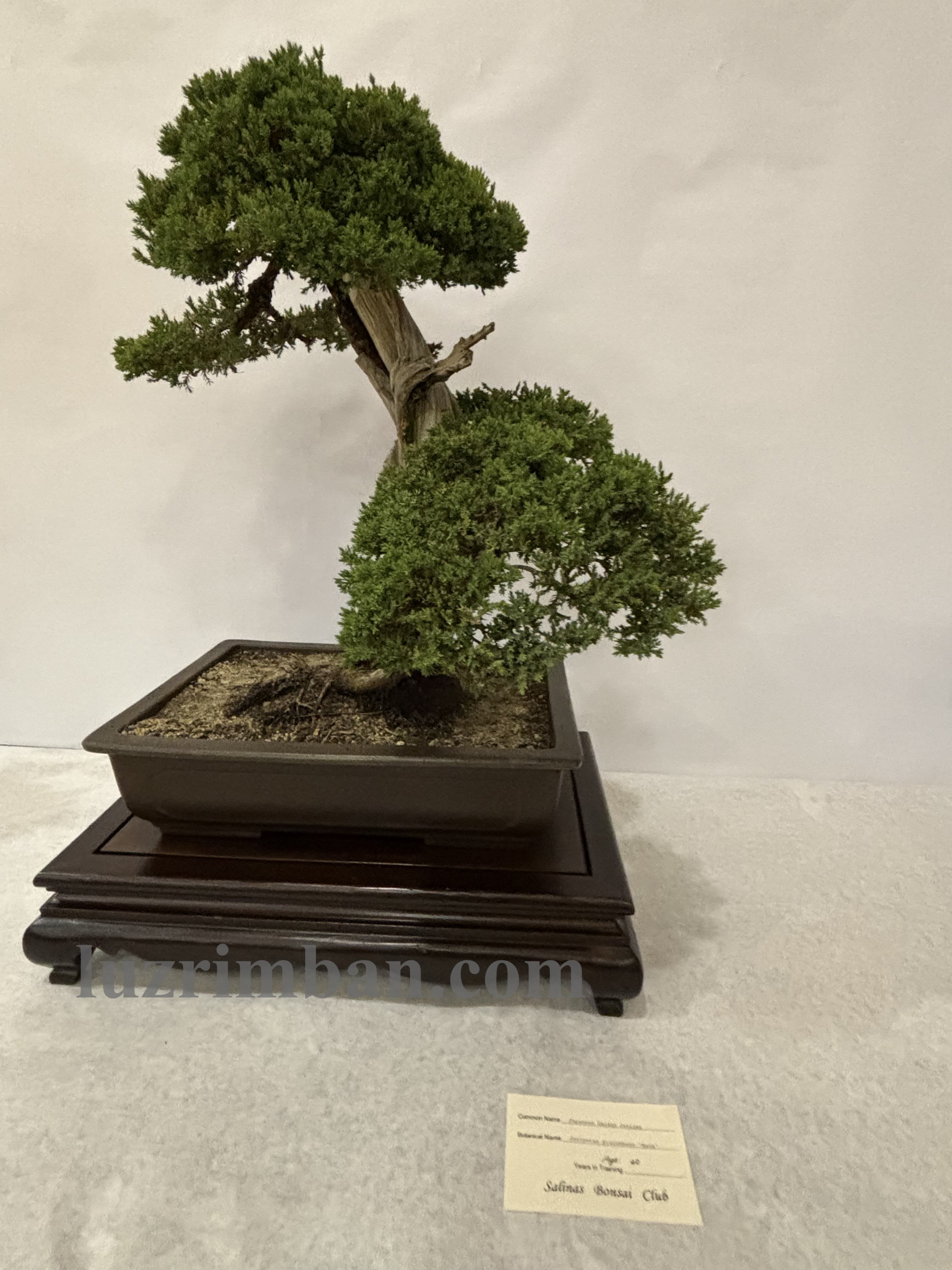
The miniatures were the products of the Salinas Bonsai Club whose members have been growing these trees. One of the oldest is the miniature Monterey Cypress whose age was listed as 45 and reminded visitors of the famed Lone Cypress along Pebble Beach.
Although bonsai is usually associated with the Japanese, it was actually introduced by the Chinese in 700 A.D., according to Robert J. Baran in “History of Bonsai,” in the blog Bonsai Empire.
The word “bonsai” itself is Japanese, although sounding very much like the Chinese “pun-sai” or “pun-tsai” which means “tree in a pot.”
My first thought was how much patience was required for someone to grow these dwarf trees, which may outlive their owners. I know from a family member who had dabbled in it long ago that to stunt the growth of a tree, it has to be constantly watched, pruned and wired or confined, its progress redirected into what the owner envisions it to be.

Indeed, bonsai growing fosters patience and is also a way of channeling one’s concentration, similar to meditation, writes Melissa Andrews in her article “Patience, not perfection” for Columbia Metropolitan Magazine.
“In Zen Buddhism, perfection does not exist. So it is with the bonsai tree,” Andrews writes. “Continually working on the tree and trying to get it as close to perfection as possible becomes a form of meditation for some.”
Food for thought there: nothing is perfect but continually working on a bonsai is like aiming for perfection.
And then I saw this conversation on Reddit about bonsai and patience:
Jinnapat397 : I’ve been tending a scrappy little pine bonsai for a couple years now, picked up half-dead from a garden center clearance bin, and every time I trim a needle or nudge a branch, it feels like I’m wrestling with time itself. It’s humbling–my life’s all deadlines and hustle, but this tree doesn’t care about my schedule, just sits there quietly outgrowing my mistakes.
Ohno: Someone with much more experience than me explained that it’s not about patience so much as changing our expectations.
Changing expectations and embracing imperfection is what bonsai growing is all about, according to WazakuraJapan’s “A Short Introduction to Japanese Bonsai philosophy and Wabi Sabi.”
“In traditional Japanese philosophy, wabi-sabi (侘び寂び) is a worldview that embraces the acceptance of impermanence and imperfection. It appreciates beauty that is inherently ‘imperfect, impermanent, and incomplete’ in nature.”
In a world full of contradictions, this is really something to think about, isn’t it? On the one hand, people are advised to accept impermanence and imperfection. But there is no stopping them from striving for something that is the exact opposite, in a bonsai tree. You can turn it into something perfect in your own eyes, permanent or perhaps long-lasting or enduring as long as someone tends to it, and complete, a whole tree or even a landscape, inside a small, shallow pot.
###
 On the road
Leave a comment