(Reflections from another Monterey Bay Aquarium visit)
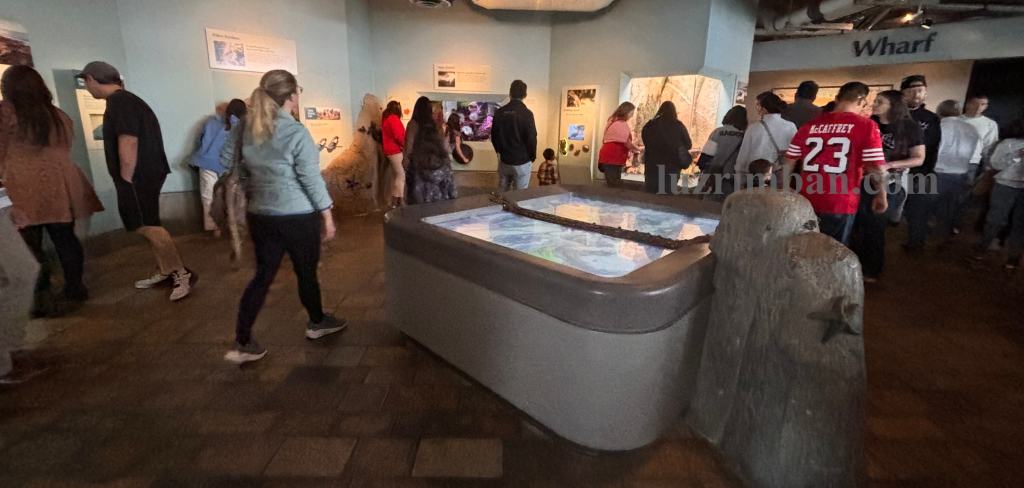
Half-day visits to the Monterey Bay Aquarium were free for locals in September, so I took advantage. In the Aquarium, you could stand transfixed, staring at marine life, oblivious to the passing of time. A few hours were insufficient to explore the whole place so I spent three half days there last month.
In one of those visits, displays of different varieties and sizes of fish started to agitate my taste buds.
As fleshy fish glided before my eyes, my mind saw steamed pompano laid on light soy sauce, garnished with ginger, scallions and cilantro.
I imagined fried tilapia with a side of sliced fresh tomatoes in fish sauce, devoured with a steaming plate of rice.
As sardines swirled through the kelp forest, I envisioned a plate of crispy anchovies, set atop fried rice.
The displays made me hungry which I thought was improper, being inside the Aquarium. As it turns out, there is no better place to contemplate seafood.
A few steps from the fish exhibit, on the first floor, was a make-believe “Seafood” bar where visitors could pretend they were ordering shrimp, tilapia, or salmon.
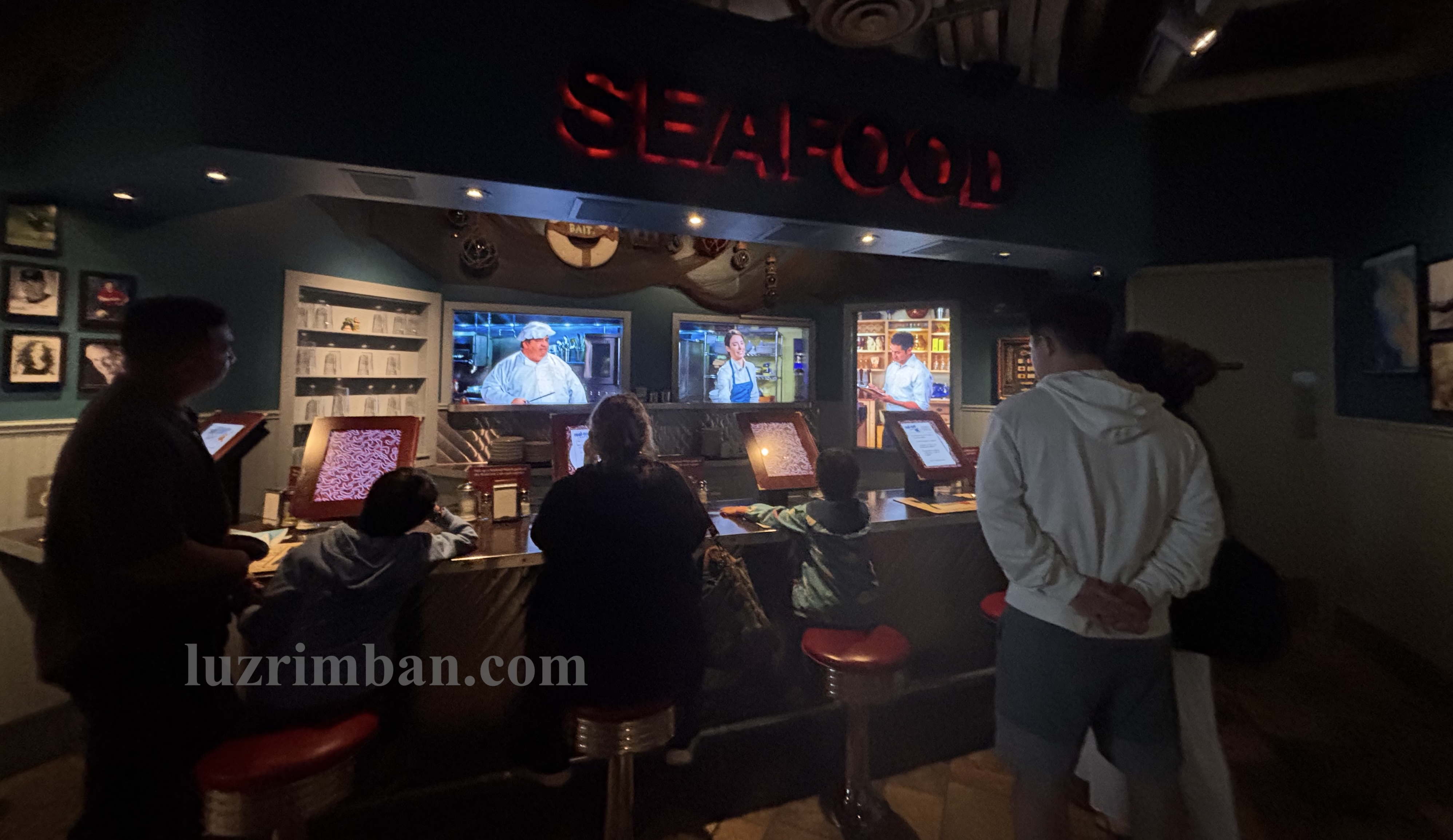
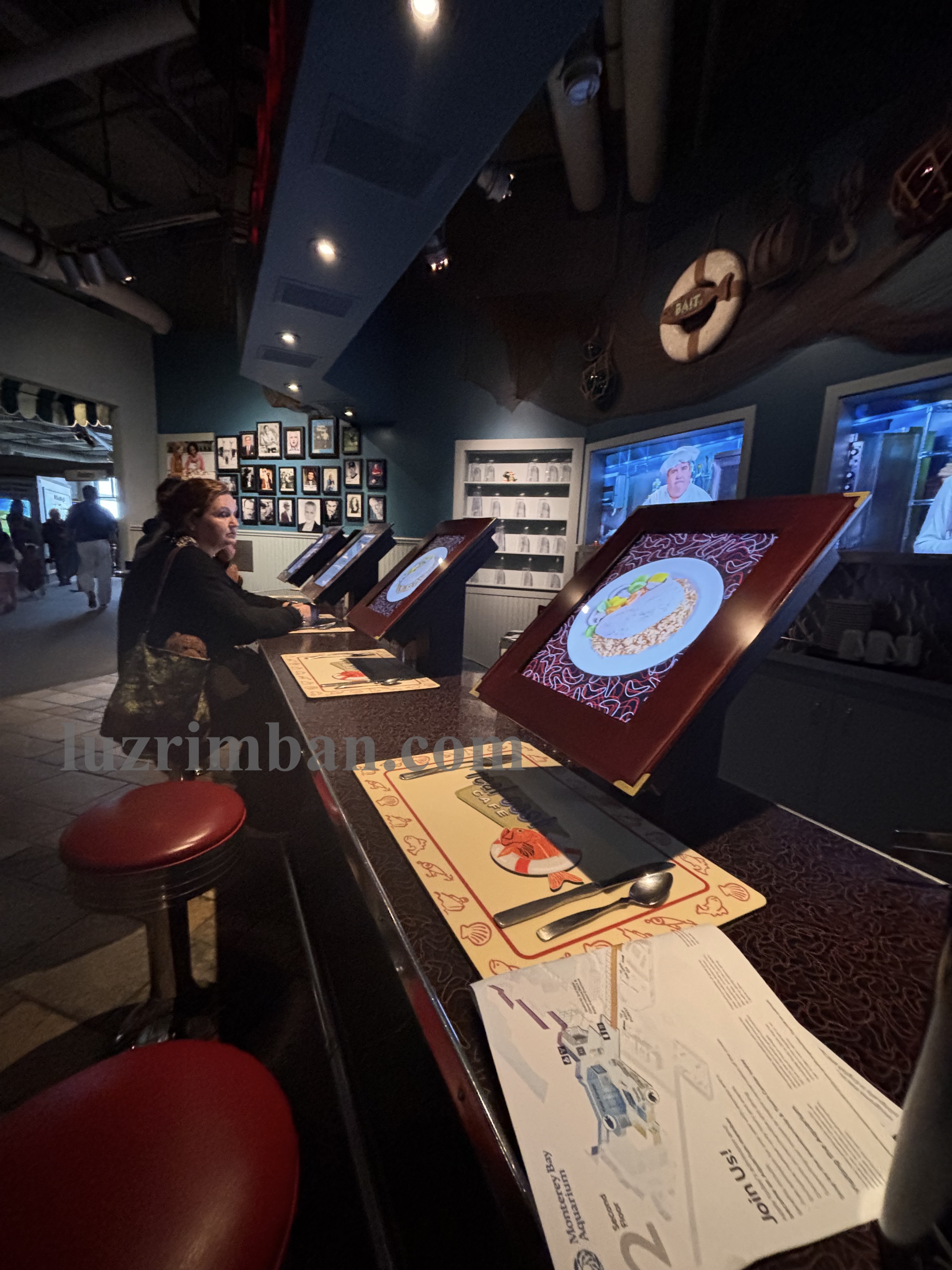
The catch, pardon the pun, was that the customers had to listen to the chefs’ spiels urging people to be mindful about what they eat, where they get it and how it was taken. The message was to consume only sustainable seafood, referring to fish and shellfish caught or farmed safely and properly, ensuring the preservation of their habitats for generations to come.
Environmentalists have long reminded people that some gustatorial tastes in seafood continue to damage marine habitats. The demand for exotic seafood, for example, forces producers to trawl for rare fish varieties, in the process destroying the corals where marine life grows.
—–
For more than half a century now, the United States’ Endangered Species Act has considered the wanton and willful destruction of habitats and the taking of endangered or threatened species illegal.
Sec. 3 (19) of the law defines the term “take” as “to harass, harm, pursue, hunt, shoot, wound, kill, trap, capture, or collect” endangered and threatened species.
Things started to change last year, however. The government began making changes to the ESA, removing some of the protections for endangered or threatened species. One of those changes was the plan to delete the word “harm” from the definition of “take” in the ESA.
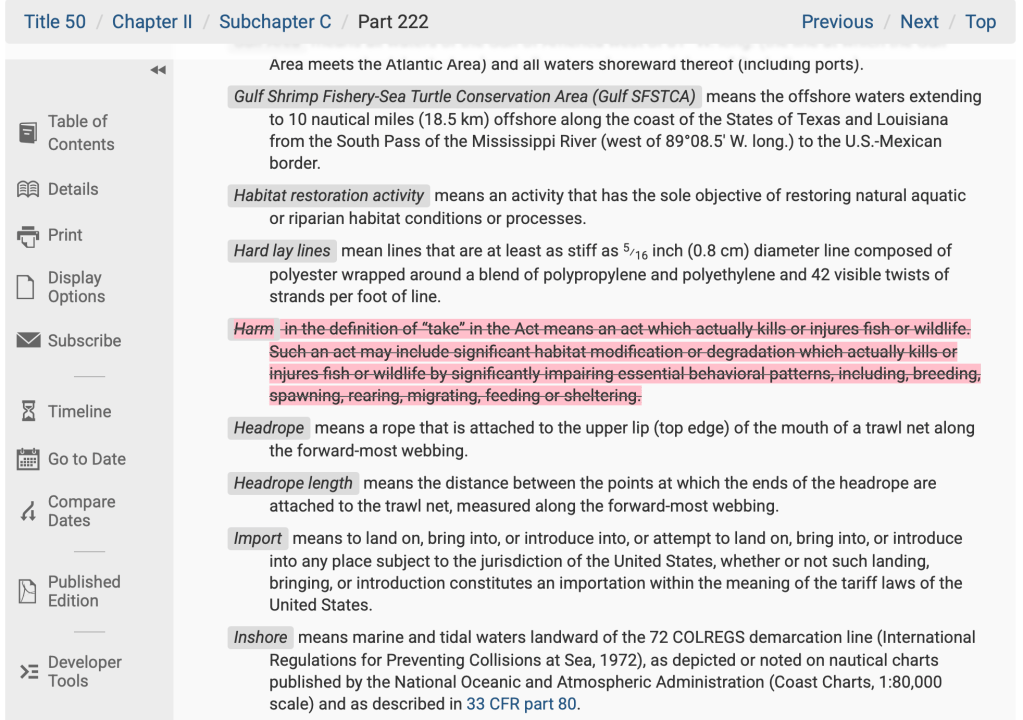
The reason “harm” had to be removed, according to the government ruling, was that it did not quite fit in with the rest of the other words that defined “take,” which are: harass, pursue, hunt, shoot, wound, kill, trap, capture and collect. It had something to do with intent. This justification came from the late Supreme Court Justice Antonin Scalia’s dissenting opinion in the case Babbit v. Sweet Home Chapter of Communities for a Great Oregon.
What the current government also focused on was that “harm” meant “significant habitat degradation” that could affect species’ life cycles, even if only incidentally. The government believes if the law retains this definition of “harm,” then it becomes a tool to regulate the use of land and seas, to the disadvantage of private citizens and businesses.
Environment groups have opposed this. They argue that without the word “harm,” nothing would stop industries from disturbing or degrading habitats in the name of doing business.
The implementing agencies–the U.S. Fish and Wildlife Service (FWS), the National Marine Fisheries Service (NMFS), and the National Oceanic and Atmospheric Administration (NOAA)–received more than 380,000 comments from the public when it closed the period of comments on May 19, 2025.
The comments were only on the decision to rescind the word harm. The agencies noted that the comments were both for and against. The agencies also received but turned down requests for a public hearing.
In July 14, 2026, the FWS and the NMFS jointly issued the ruling formally deleting the word “harm” from the ESA definition of “take.” The ruling took effect 60 days later, on Sept. 14.
“Federal agencies now say that destroying habitat no longer falls under the definition of harm to species protected by the Endangered Species Act,” said Dr John Hlavin, marine professor and Monterey Bay Aquarium ambassador, in an Instagram post.
A shark biologist, Hlavin cited as an example the scalp hammerhead shark, some populations of which are listed as endangered. Modifying the habitats of the hammerhead shark would affect breeding, feeding, growth maturity and migration.” Indirectly, it would be harming or illegally taking, he said.
—
The removal of “harm” in the ESA comes after two other rulings that took effect in July. One removes protections for newly-listed threatened and endangered species. The other excludes some habitats from designation as “critical” for economic or national security reasons.
Still, there is hope, Hlavin said. “These decisions aren’t set in stone, and there are ways we can undo these changes to uphold a strong Endangered Species Act.”
In September, California led 21 states in filing suit against the administration for weakening the ESA by issuing the three rulings. The group Defenders of Wildlife added another issue to the complaint: that the FWS and the NMFS failed to consult the public on their decision to remove the ESA protections.
The Monterey Bay Aquarium also issued a strongly worded statement blaming the current administration for weakening the ESA.
The visit to the Aquarium may have spurred reflection on seafood, but it also made a connection. That some populations of humans are like threatened and endangered species. They are all creatures whose homes, freedoms and protections could be taken away, unless defenders rise and push back. ###
—
Related stories:

Leave a Reply